
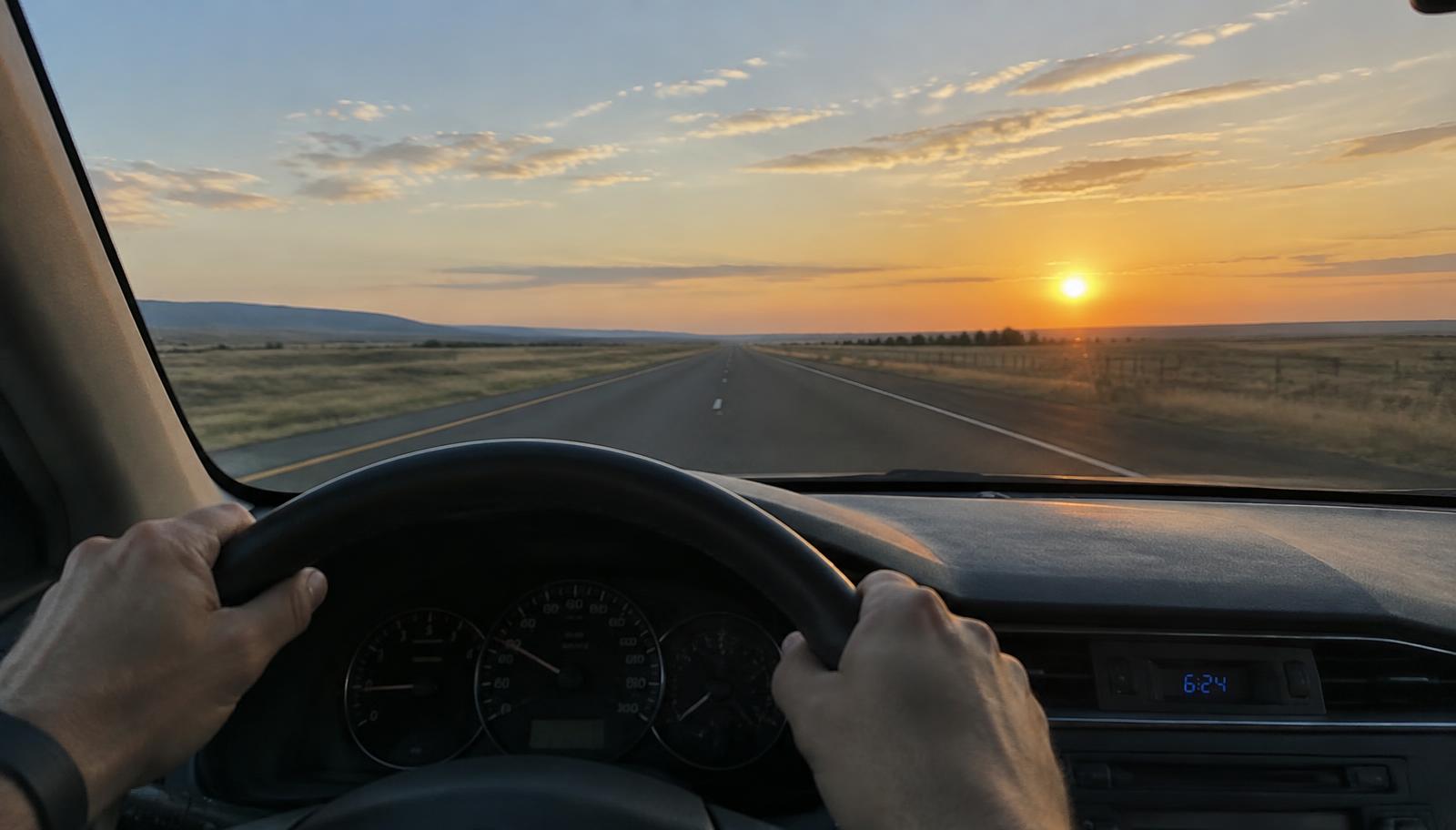
Drive three to four hours a day on a road trip. Four hours is the sweet spot, five is the ceiling, and anything past six turns the day into a transfer. That is roughly 250-350 km on motorways or 150-200 km on mountain and coastal roads, and it still leaves you an afternoon worth having.
Why four hours is the practical limit
Four hours of driving is rarely four hours away from home. Add fuel, coffee, lunch, a photo stop and one wrong turn, and a 4-hour route eats six hours of the day. Two hours of margin is not pessimism, it is what actually happens.
| Driving per day | Real time away | What is left of the day |
|---|---|---|
| 2 h | 3-4 h | A full afternoon and evening |
| 4 h | 5-6 h | One proper stop, relaxed evening |
| 6 h | 8-9 h | Dinner and sleep |
| 8 h+ | 10-12 h | Nothing. This is a travel day |
How fast do you really average?
Planned speed and real speed are different numbers.
- Motorway — 90-100 km/h average once stops are counted, not 130.
- National roads — 65-75 km/h.
- Mountain passes and coastal roads — 45-60 km/h. A 200 km alpine day is a full day.
- City exits and arrivals — budget 30-45 minutes on each end.
If your plan assumes the speed limit, it is wrong by about 25%.
How many hours can you legally and safely drive?
There is no civil limit for private drivers in most countries, but fatigue research is consistent: risk climbs sharply after two hours without a break and again past eight hours total. The workable rules:
- Break for 15 minutes every two hours.
- Swap drivers every two to three hours if you have two.
- Stop driving by early evening; dusk and night driving in unfamiliar terrain is where trips go wrong.
- Never plan a long leg on the day you fly in.
What about the first and last day?
Both are shorter than you think. Day 1 starts late, always — key collection, packing, one last errand. Give it two to three hours of driving. The final day needs a buffer for a return flight or a car drop-off, so treat it as a transfer day and put nothing interesting on it.
Kids, pets and older passengers
Cut the daily figure by a third. Two to three hours of driving a day with a stop every 90 minutes is realistic. Plan lunch somewhere with space to run around rather than a service station, and accept that you will cover fewer kilometres per day than the map suggests.
A quick sanity check for your route
Before you book anything, run each day through this:
- Add up the driving time, not the distance.
- Multiply by 1.4 for stops and traffic.
- Add 45 minutes for city entry and exit.
- If the result is over seven hours, split the day or drop a stop.
Days that fail this test are the reason road trips feel exhausting. It is almost always one stop too many, not the wrong stop.
Let the plan do the maths
Doing this by hand for seven days across a dozen stops is where most plans quietly break. Tripvora calculates real driving time between every stop, flags days that run long before you commit to hotels, and shows the fuel cost per day alongside them. If a day is overloaded, you see it while you can still fix it.
The AI road trip planner can also rebuild an overloaded day into two sane ones in a couple of seconds.
Related reading
- The complete guide to planning a road trip
- How to plan a 5-day road trip: days, km and costs
- How to plan a 7-day road trip
FAQ
Is 8 hours of driving a day too much? For one transfer day, no. For consecutive days, yes — it leaves no time for the trip itself and fatigue compounds.
How many kilometres is a comfortable day? 250-350 km on motorways, 150-200 km on winding roads.
How often should you stop? Every two hours, for at least 15 minutes.