Key stops: Zaragoza · Teruel · Cuenca
Open this route in the plannerBarcelona to Madrid Road Trip: 5-Day Route
A Barcelona to Madrid road trip works best over five days when you resist the fastest motorway and travel through Zaragoza, Teruel and Cuenca. This route covers roughly 810 kilometres and about nine and a half hours of driving. Most days stay below three hours behind the wheel, leaving time for old quarters, long lunches and the places between Spain's two biggest cities. If you only want to get from Barcelona to Madrid, take the train. Drive this route when the journey is the point.
Barcelona to Madrid road trip at a glance
| Day | Route | Distance | Driving time |
|---|---|---|---|
| 1 | Barcelona to Zaragoza | ~315 km | ~3 hr 10 min |
| 2 | Zaragoza to Teruel | ~180 km | ~2 hr |
| 3 | Teruel to Cuenca | ~150 km | ~2 hr |
| 4 | Cuenca local loop | ~60 km | ~1 hr 20 min |
| 5 | Cuenca to Madrid | ~170 km | ~1 hr 50 min |
The total is about 810 kilometres, depending on your local detours. Treat every time here as a planning estimate rather than a promise. Traffic leaving Barcelona, roadworks and stops can change the day.
You can see this itinerary in the map above, browse other Community Routes, or rebuild it around your own dates in the Tripvora road trip planner.
Is five days enough to drive from Barcelona to Madrid?
Yes. Five days are enough if you want a road trip rather than a rushed transfer. The direct AP-2 and A-2 route takes around six and a half hours without meaningful stops, but it skips the quieter interior landscapes that make driving worthwhile.
This itinerary turns the crossing into four distinct experiences: Zaragoza's grand plazas, Teruel's Mudéjar towers, Cuenca's ravine-edge old town and a final easy approach to Madrid. The longest drive comes first, while your energy is fresh. The following days are deliberately lighter.
If your schedule is tighter, keep Zaragoza and continue directly to Madrid on day three. If you have a full week, add Albarracín after Teruel and a second night in Madrid.
Day 1: Barcelona to Zaragoza
Leave Barcelona after the morning rush if you can. The practical route follows the A-2 inland through Catalonia before crossing into Aragón. It is the longest day of the trip, but the road is straightforward and service areas are regular.
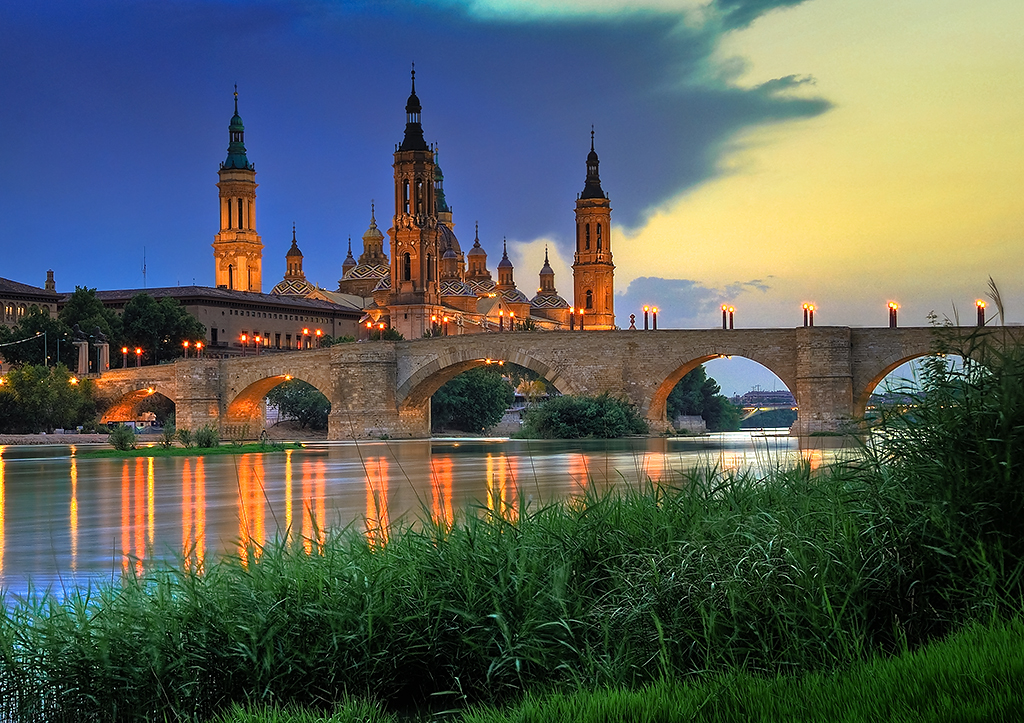
Aim to arrive in Zaragoza by mid-afternoon. Park outside the oldest streets rather than trying to thread a car through the centre. Walk toward the Basílica del Pilar, cross the Ebro for the view back to its domes, and leave enough time for tapas around El Tubo.
Plan for: about 315 km and 3 hours 10 minutes of driving, before breaks.
What is worth stopping for between Barcelona and Zaragoza?
Lleida is the sensible halfway pause. La Seu Vella rises above the city and gives you a reason to stretch your legs, but do not force it into the day if you leave Barcelona late. A relaxed Zaragoza evening is more valuable than collecting another hurried stop.
Day 2: Zaragoza to Teruel
The landscape opens quickly south of Zaragoza. Take the A-23 toward Teruel and let this be an intentionally short driving day. Two hours on the road means you can spend the morning in Zaragoza or reach Teruel early enough to explore without watching the clock.
Teruel is compact, walkable and often overlooked. Its Mudéjar architecture is the reason to stay: look for the towers of El Salvador and San Martín, then walk to Plaza del Torico. The town feels especially calm once day visitors have left.
Plan for: about 180 km and 2 hours of driving.
If you add Albarracín, allow at least another half-day. It is beautiful, but it is not a quick roadside stop. The slower access and parking make it a genuine detour.
Day 3: Teruel to Cuenca
This is the quietest stretch of the route. Roads cross high, sparsely populated country before descending toward Cuenca. Fuel up before leaving Teruel and carry water; services are less frequent than on the motorway from Barcelona.
Cuenca's old town sits above the Huécar and Júcar gorges. Arrive in daylight so the first approach makes sense. The Casas Colgadas are the famous sight, but the better experience is walking the lanes around the cathedral and following the path toward the San Pablo Bridge as the light softens.
Plan for: about 150 km and 2 hours of driving, plus any scenic pauses.
This is the day most likely to feel different from the direct Barcelona–Madrid journey. Do not overload it with extra towns. The empty plateau and the arrival into Cuenca are the experience.
Day 4: A slower day around Cuenca
Stay in Cuenca for a second night. A road trip does not improve simply because the car moves every morning.
Use the day for a short local loop into the Serranía de Cuenca. The Ventano del Diablo viewpoint and Ciudad Encantada can fit into a relaxed outing, but check local opening information and road conditions before leaving. Return to Cuenca for the evening instead of packing and changing hotels again.
Plan for: roughly 60 km and 1 hour 20 minutes of driving if you visit both areas.
If the weather is poor, skip the loop. Spend the morning in the Museo de Arte Abstracto Español and give yourself a long lunch. A flexible day is part of good route planning, not an empty space to fill.
Day 5: Cuenca to Madrid
The final drive is short and uncomplicated on the A-40 and A-3. Leave after breakfast and you can reach Madrid before lunch, but your arrival time matters more than your departure time. Weekday traffic can build sharply near the city.
Choose accommodation with parking or return the rental car before entering central Madrid. A car is useful for this journey and inconvenient once you arrive. Do not plan to drive between Madrid's central sights.
Plan for: about 170 km and 1 hour 50 minutes in light traffic.
How much does this Spain road trip cost?
For two people sharing a car and room, a realistic mid-range estimate is:
- Fuel
- €90–€120
- Tolls
- €0–€25
- Parking
- €45–€80
- Four hotel nights
- €360–€640
- Food
- €250–€450
- Attractions
- €40–€100
- Total
- €785–€1,415
Fuel depends on your vehicle and detours. Hotel prices move far more than fuel costs, especially around weekends and events. This estimate excludes the rental car itself because rates vary dramatically by season, driver age and one-way return fees.
Use our road trip cost calculator guide to adjust the numbers for your vehicle and travel style.
Where should you stay each night?
Book one night in Zaragoza, one in Teruel and two in Cuenca. In each city, favour a place just outside the oldest pedestrian streets with confirmed parking. A cheaper room can become expensive when the nearest secure garage is far away.
In Zaragoza, staying near the centre makes the evening easy. In Teruel, most central sights are close together. In Cuenca, decide whether views or vehicle access matters more: the upper old town is atmospheric, while the modern town is easier for parking and onward travel.
When is the best time for this route?
Late April to June and September to October offer the best balance of daylight and manageable temperatures. July and August can be intensely hot in the interior. Winter is quieter, but Teruel and the high ground around Cuenca can be cold, with occasional snow or ice.
Check forecasts across the whole route, not only in Barcelona and Madrid. Conditions inland can be very different from either endpoint.
What should you know before driving?
- Low-emission zones: Barcelona and Madrid restrict some vehicles. Confirm the current rules for your registration before entering either city.
- Parking: Reserve accommodation parking where possible. Old centres are better explored on foot.
- Fuel: Fill up before the Teruel–Cuenca stretch rather than waiting for a convenient station.
- Breaks: Stop before you feel tired. Our guide to how many hours to drive per day explains why shorter days usually make better trips.
- Times: Navigation estimates do not include food, viewpoints, parking or the walk from the car to the old town.
Can you customise this Barcelona to Madrid route?
Absolutely. The route above is a balanced starting point, not a rule. Remove Teruel for a faster journey, add Albarracín for medieval streets, or spend the fourth day hiking rather than sightseeing in Cuenca.
For help balancing distance across a medium-length trip, read how to plan a five-day road trip. Then open the free multi-stop planner, add Barcelona, Zaragoza, Teruel, Cuenca and Madrid, and adjust the days until the pace feels like yours.
The best version of this drive is not the one with the most pins. It is the one that still gives you energy when you arrive.
Final route verdict
Drive Barcelona to Madrid over five days if you want Spain's interior to be part of the holiday. Zaragoza, Teruel and Cuenca each justify an overnight stop, and the route avoids the familiar mistake of turning every day into a race.
The plan is deliberately calm: one longer opening drive, two short transfers, a nearly car-free day and an easy finish. Start with this shape, check live conditions before departure, and leave enough room for the road to change your mind.